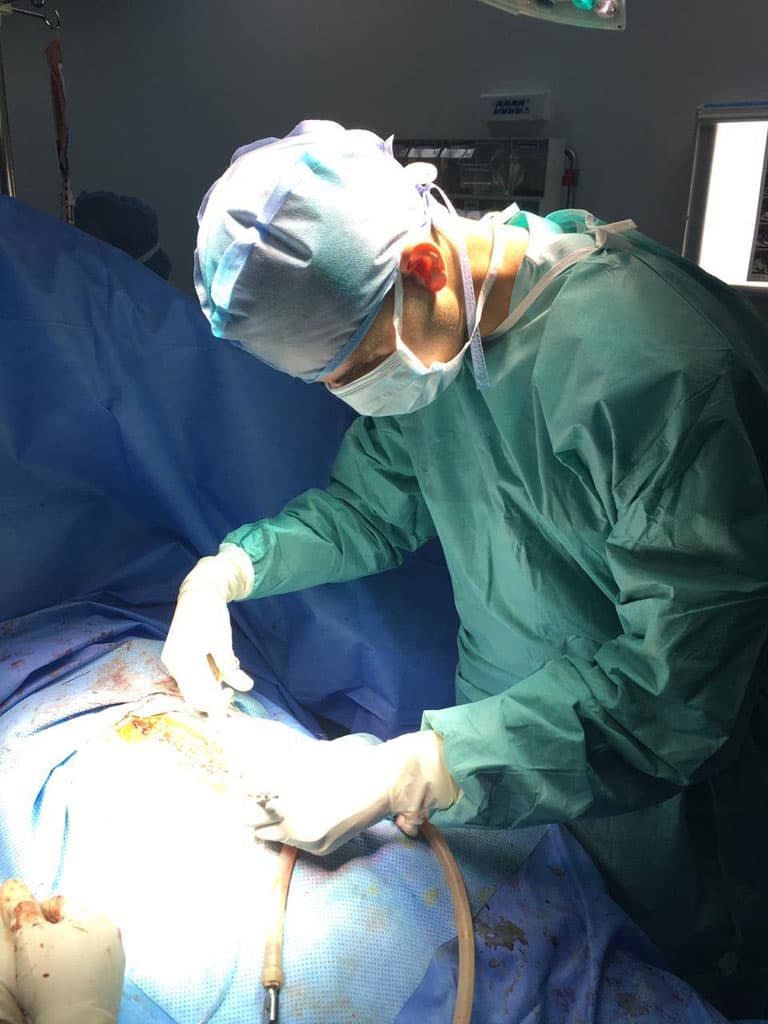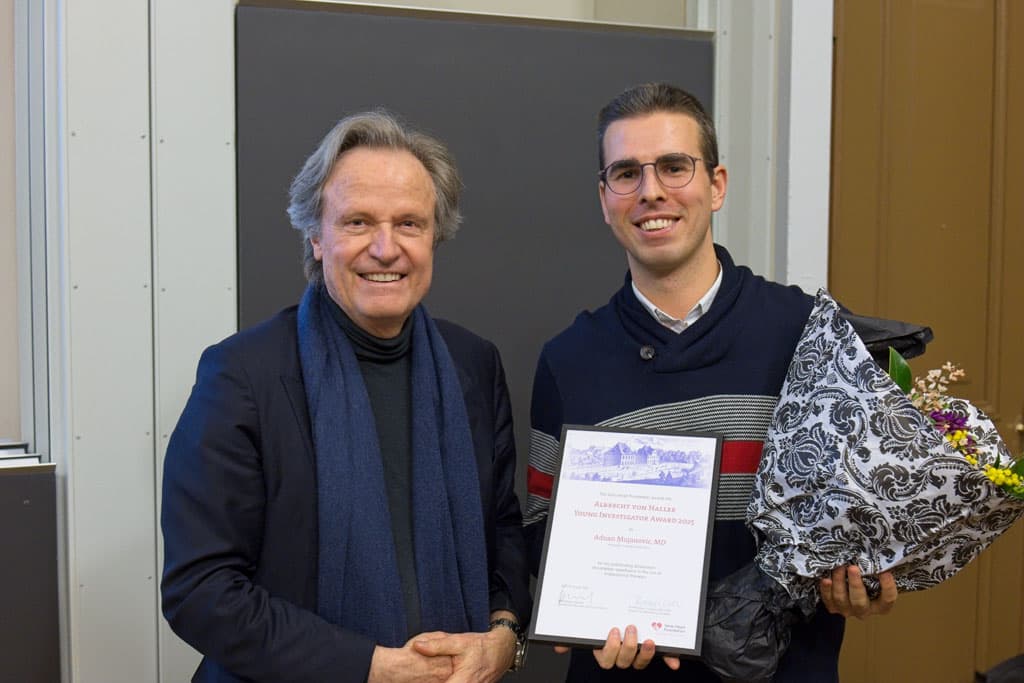
The path that began in the classrooms of the Medical High School in Tuzla and continued at the University of Tuzla has led 30-year-old Adnan Mujanović into the field of diagnostic and interventional neuroradiology, doctoral research on stroke treatment, and the prestigious Albrecht von Haller Award. Yet behind these academic achievements and an international career, he says, stand years of continuous work, curiosity, and a willingness to learn.
Mujanović developed his interest in medicine while attending the Medical High School in Tuzla, inspired by the idea that he could directly help people through his work. This interest gradually evolved into a clear professional ambition, which he continued to pursue by enrolling at the University of Tuzla. It was during his years as a medical student that he was shaped both personally and professionally, laying the foundation for his future career.
Throughout his studies, Mujanović came to understand the true complexity of the medical profession—an area that proved to be far broader, more demanding, and more challenging than he had initially imagined.
“I realized that medicine is a much broader and more complex field than I had originally thought, which motivated me even more to continue building my professional path in that direction,” says Mujanović.
His studies taught him that knowledge is not static but rather a process of continuous learning.
“This way of thinking naturally directed me toward research work later on,” he explains.
As a student, he had opportunities to participate in various local and international projects and gradually take on a more active role in research.
“I particularly remember my first scientific experience, when I presented the results of a project that originated from a summer exchange at the SCK CEN research center in Mol, Belgium, at the MediCon Congress in Tuzla,” he recalls.
He believes that the University of Tuzla provided students with opportunities to develop independence, initiative, and professional curiosity through such experiences.
“I still believe that curiosity and openness to new experiences are among the most important qualities a student can have.”
One of the most valuable things he gained from the University of Tuzla, he says, was the ability to adapt and work effectively in different circumstances.
“Studying medicine teaches you perseverance, discipline, and responsibility—qualities that I consider extremely important in any professional environment.”
Modestly, he says he would not describe his career so far as a definitive success, but he believes the University provided an excellent foundation for his further development.
“During my studies, I developed analytical thinking and independent problem-solving skills, which are essential both for making clinical decisions and for conducting research.”
He also emphasizes the importance of the many colleagues, professors, and mentors he met during his studies.
“I had the opportunity to learn from a large number of colleagues, teachers, and mentors, and I believe that this collaborative environment had the greatest impact on my development.”
He particularly highlights the role of student organizations such as MEDICUS and BoHeMSA, through which he developed organizational abilities and soft skills that have also been important for his professional growth.
According to Mujanović, it is precisely this combination of formal and informal education that gives university life its full meaning.
“A university is not only a place where professional knowledge is acquired; it is also a space where people develop broader professional and personal values that later play a significant role in both career and life.”
From the Medical Faculty in Tuzla to a University Hospital in Switzerland
After graduating, his professional journey unexpectedly led him to Switzerland. He received an invitation from the Head of the Department of Neurology at the University Hospital Inselspital in Bern, where he was given the opportunity to become familiar with their work.
Today, he works as a resident physician and researcher at Inselspital University Hospital in Bern in the field of diagnostic and interventional neuroradiology.
Although only thirty years old, he has completed a doctoral degree focused on acute stroke treatment while simultaneously pursuing his clinical training. His work in this area earned him the prestigious Albrecht von Haller Award.
He views the award as recognition that research can make a real contribution to improving patient care.
“However, I do not see this award as an individual success but as the result of the work of many people—colleagues, mentors, researchers, and clinical teams with whom I have had the privilege to collaborate. Medicine, especially the field of acute stroke treatment, is highly team-oriented, and no significant breakthrough is possible without strong cooperation.”
Discussing the research itself, Mujanović explains that the goal was to improve the understanding and treatment of acute ischemic stroke, a condition caused by an interruption of blood flow to part of the brain.
“Our focus was on developing and applying new methods that would enable faster and more precise decision-making in acute treatment situations.”
Bosnia and Herzegovina Has Room for Meaningful Reforms
Comparing his experiences in Bosnia and Herzegovina with those in Switzerland, Mujanović notes significant differences.
“I believe that the educational system in Bosnia and Herzegovina is still largely based on a traditional approach, whereas in Switzerland curricula are continuously adapted to the evolving needs of society.”
In Switzerland, he explains, students often enjoy greater flexibility throughout their education, and the focus is not solely on memorizing large amounts of information but on applying knowledge in practice.
“Greater emphasis is placed on interactive teaching methods and the development of critical thinking from earlier stages of education.”
When discussing healthcare systems, he points out that Switzerland places strong emphasis on long-term planning and optimization of healthcare processes. Such investments are generally viewed as investments in the quality of healthcare rather than merely financial expenses.
At the same time, he stresses that the two healthcare systems are organized differently. While healthcare insurance in Bosnia and Herzegovina is predominantly social in nature, Switzerland’s system is largely based on private health insurance, which significantly influences the way healthcare services function.
Interestingly, both education and healthcare in the two countries are largely regulated at the cantonal level.
“This demonstrates that Bosnia and Herzegovina also has room for meaningful reforms and improvements that could be economically, socially, and professionally beneficial in the long term.”
A Message to Young People
To conclude, Mujanović emphasizes that a student’s quality is not determined solely by the country or university where they studied, but primarily by their motivation, dedication, and ability to adapt to new environments.
Of course, entering an international academic or clinical environment often requires additional effort, continuous professional development, and adaptation. Nevertheless, he believes that students from Bosnia and Herzegovina possess a strong foundation and the potential to be competitive and successful beyond the country’s borders.
“I believe that education in Bosnia and Herzegovina often teaches us resourcefulness, perseverance, and the ability to work under demanding circumstances, which can later become a significant advantage.”
His message to young people is simple: be curious, take advantage of exchange programs, international projects, and opportunities for further education and professional development.
From the University of Tuzla to One of Switzerland’s Leading University Hospitals: Adnan Mujanović’s Journey in Medical Research